

Mixed-Use and Class A Multifamily Development — How We Think About It

Parker Webb
Development is a different business than acquisition. The risk profile is different. The timeline is longer. The skill set required — entitlement, construction management, lease-up execution — is distinct from the judgment calls involved in acquiring and repositioning existing assets, whether that's a core hold, a core-plus repositioning, or a value-add turnaround. We don't do development on every deal, and we don't do it in every market.
When we do, we do it selectively, with a clear thesis for why that submarket, that product type, and that moment in the cycle creates an opportunity worth pursuing.
Why new construction multifamily
We spent years trying to make affordable housing work. We went into it with genuine conviction — the belief that a good landlord with the right systems could preserve and build affordable housing while generating a reasonable return for investors, and that doing so would be one of the most meaningful things a real estate operator could do. We got our teeth kicked in. The operational complexity, the social service requirements that fall outside what any landlord is equipped to provide, and the structural economics of the asset class made it untenable. We walked away from that chapter having lost time, capital, and some optimism — but also with a clear-eyed understanding of where our skills and resources can actually create value.
We also looked hard at value-add multifamily — acquiring older existing housing stock and renovating it to capture higher rents. We're skeptical of the strategy on its merits. The complexity of executing meaningful capital improvements in an occupied residential building is routinely understated, the displacement dynamics are real and uncomfortable, and when you honestly stress-test the risk-adjusted returns against either new construction or a well-located stabilized asset, the math is rarely as compelling as the pitch decks suggest. You're taking on development-level execution risk without development-level upside, in a product type where the human stakes of getting it wrong are higher than in any other asset class. We'd rather build something new or own something stable than occupy that middle ground.
Where we do see genuine opportunity is new construction in supply-constrained, high-income suburban submarkets. The residents we're building for — dual-income households, young professionals, empty-nesters downsizing from owned homes — have meaningful purchasing power and real preference for modern, amenity-rich rental housing in walkable or semi-walkable suburban environments. This is a different renter profile than the urban luxury high-rise segment, which has seen the most supply pressure and the most concessions. Well-located suburban new construction in the right trade areas has remained well-occupied with limited concessions in most Midwest markets.
Why mixed-use — and what we mean by it
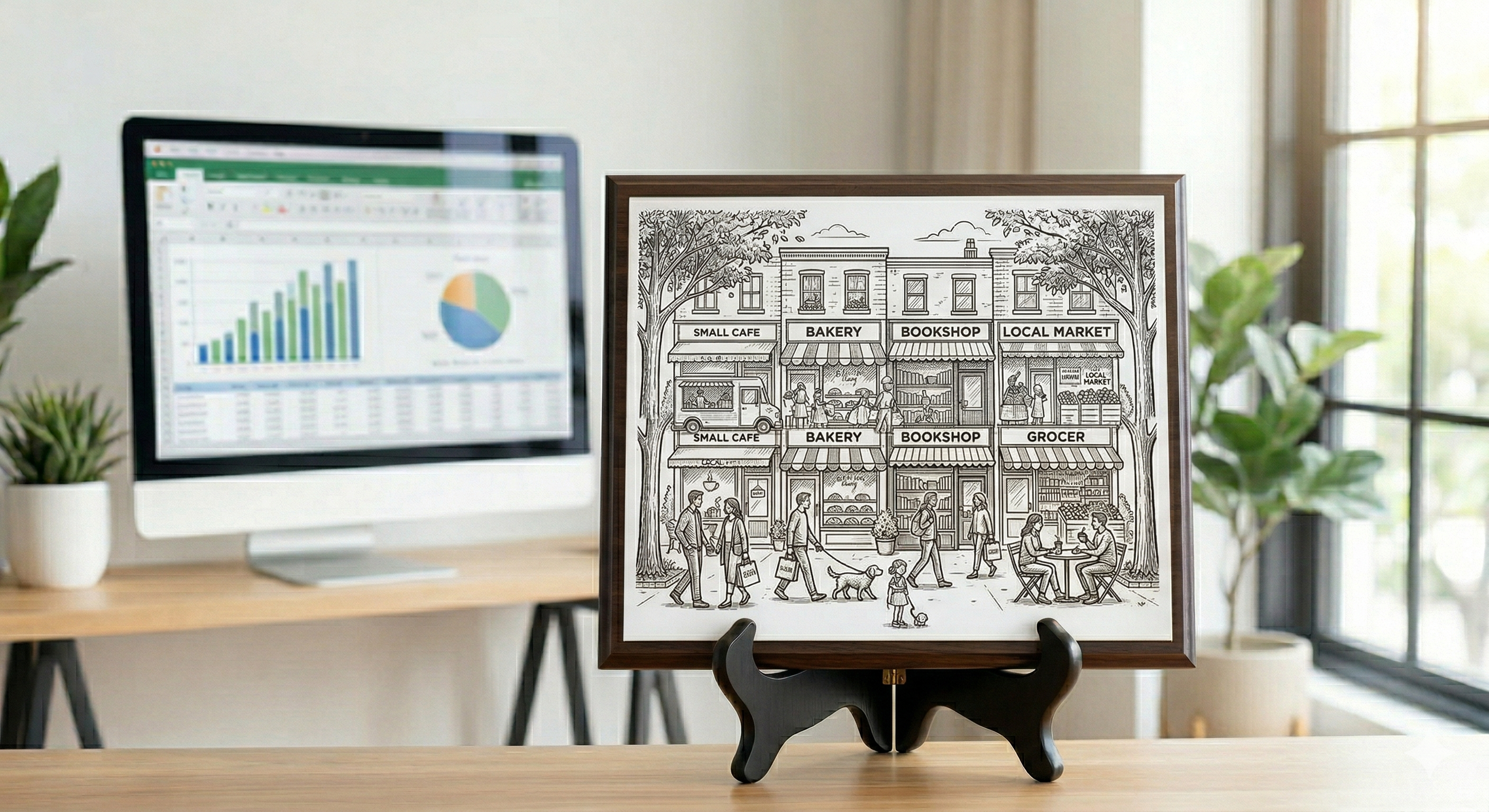
When most people hear "mixed-use" they picture the same thing: retail on the ground floor, apartments above, in a walkable urban setting. City planners love this model. Lenders have learned to finance it. And in the densest urban cores, it works.
Outside of those environments, it often doesn't. The reason so many first-floor retail spaces in mixed-use buildings sit vacant isn't bad luck or poor leasing — it's that the site was selected for its residential merits, not its retail merits. Apartments work in a lot of places. Retail works in far fewer. When you build retail underneath apartments on a site that was fundamentally a residential site, you get exactly what you'd expect: empty storefronts that drag down the building's aesthetics, the neighborhood's perception, and the developer's returns.
Our thesis is different. We pursue what we'd call mix-of-use — projects where retail and residential are genuinely complementary, but not necessarily stacked on top of each other. The retail component might be adjacent to the residential rather than beneath it. The key is that the site has to work for retail independently — real road frontage, real trade area demand, real tenant interest — before we'd consider adding a residential component. When those two things exist in proximity, the synergies are real: the residential population supports the retail, the retail amenitizes the residential, and the combined asset is more valuable and more defensible than either would be alone.
This is also why our development activity connects directly to our existing retail portfolio. We're not looking for apartment sites and asking whether retail might work nearby. We're looking at retail corridors we already know and own, and asking whether residential development in that trade area would strengthen what we've already built. That sequencing matters enormously — and it's the opposite of how most mixed-use development gets done.
Where we develop
We don't pursue development speculatively in markets where we have no existing presence. Our development activity is concentrated in and around corridors where we already own and operate — where a new mixed-use or multifamily project has a synergistic relationship with our existing portfolio. A well-designed residential project adjacent to a retail center we already own increases foot traffic, improves the trade area, and enhances the value of assets we're already invested in. That adjacency is a discipline and a thesis: we develop where we already have skin in the game and where the project makes the whole portfolio stronger.
Our discipline
We don't do development for the sake of building things. We do it when the deal-level math — realistic construction costs, achievable rents, defensible exit assumptions — produces returns that justify the additional risk and timeline relative to acquisition alternatives across the risk spectrum, from core to value-add.
The discipline is in saying no to the deals that look exciting but don't pencil under conservative assumptions, and yes to the ones where the fundamentals are genuinely compelling. That discipline is harder to maintain when capital is cheap and markets are rising. It's most valuable — and most differentiating — when conditions tighten.